
The Best Flooring for Bathrooms: What Lasts, What Doesn't, and Why
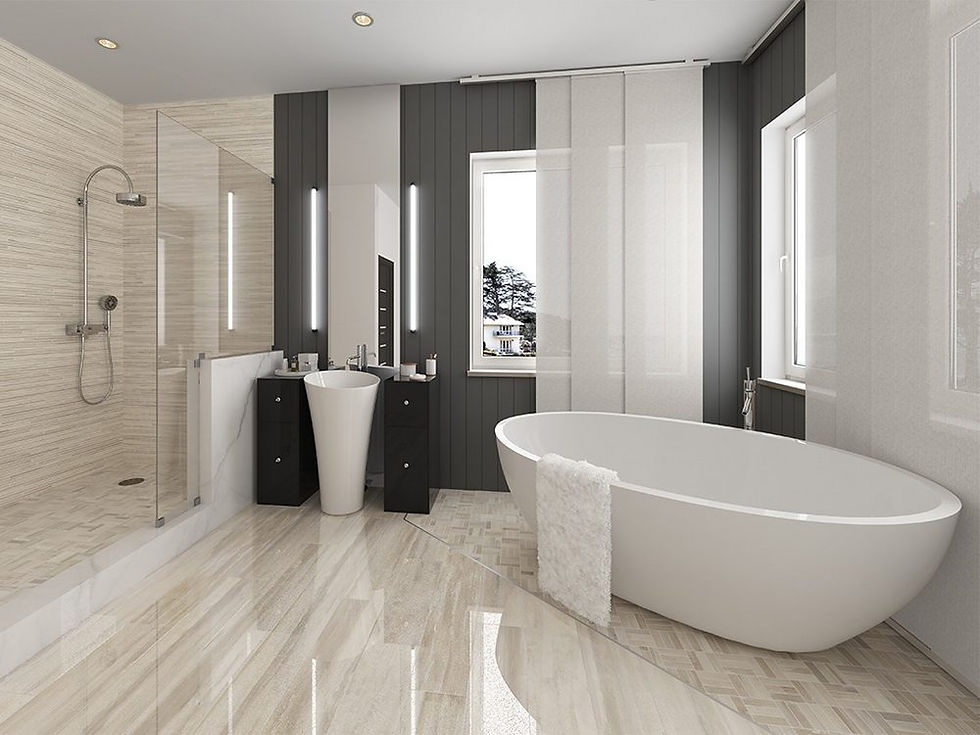
The bathroom is one of those rooms where flooring decisions carry outsized consequences. It is a small space — the material does not cost much —, but it is also the room that sees the most water, the most bare feet, the most steam, the most cleaning products, and in older homes, the most mysterious moisture from directions you cannot immediately identify.
Get the flooring right, and nobody notices — it just looks great and never gives you trouble. Get it wrong, and you are dealing with mold under the floor, grout that will not stay clean, or a beautiful natural stone that stains every time someone splashes water on it.
Here is what actually works in Lowcountry bathrooms — and what sounds good until it arrives at your house.
The Non-Negotiables for Bathroom Flooring
Before the options, the baseline requirements for any bathroom floor:
Not optional. The floor will get wet. How it handles that water — especially repeated exposure over years — determines its lifespan.Water resistance:
Wet feet on slick surfaces are a legitimate safety concern. The flooring you choose must have an adequate coefficient of friction (COF) for wet conditions. Your installer should know this number; if they do not, ask. Slip resistance:
Bathrooms are humid. Flooring materials that harbor mold — particularly grout-heavy installations without proper sealing, or wood products without proper moisture barriers — become health issues, not just aesthetic ones. Mold and mildew resistance:
You will clean this floor frequently with wet mops, cleaning products, and occasionally bleach-based cleaners. The floor needs to handle that routine without degrading. Easy cleaning:
Option 1: Porcelain and Ceramic Tile
Tile is the traditional king of bathroom flooring — and it has earned that position over a very long time. A properly installed, properly grouted tile floor is genuinely impervious to water, lasts the lifetime of the home, and handles every cleaning product you can throw at it without complaint.
Why tile wins in bathrooms:
Completely waterproof when properly installed with appropriate grout and sealant
Available in an almost unlimited range of sizes, patterns, colors, and textures
Durable — quality porcelain tile will outlast everything else in the room
Hygienic — non-porous surface does not harbor bacteria or mold when maintained
Works beautifully with radiant floor heating — the best material conductor of floor heat
The honest limitations:
Cold underfoot — tile is thermally unforgiving in the morning without radiant heat
Hard underfoot — less forgiving than LVP for extended standing
Grout requires maintenance — unsealed or neglected grout will stain and harbor mildew
Installation cost is higher — proper tile installation requires more skill and time than LVP
Getting tile right in a Lowcountry bathroom:
Tile selection matters, but installation quality matters more. The waterproofing membrane beneath the tile — particularly in shower areas — and the grout sealing regimen are what determine whether your tile bathroom stays beautiful or becomes a mold management project. At Charleston Design Center, we specify and install tile with the moisture management details that make the difference between a bathroom that looks great for thirty years and one that needs renovation in eight.
For floor tile specifically: specify a slip-resistant finish. Polished porcelain tile looks stunning but is treacherous when wet. Matte, honed, or textured finishes provide the grip that safety requires without sacrificing visual appeal.

Option 2: Luxury Vinyl Plank (LVP) and Luxury Vinyl Tile (LVT)
LVP and LVT have become the most popular bathroom flooring choice for renovation projects in the Lowcountry — and for good practical reasons. 100% waterproof, warm underfoot, comfortable to stand on, and available in formats that realistically replicate the look of hardwood and natural stone.
Why LVP and LVT work exceptionally well in bathrooms:
100% waterproof core — water sitting on the floor or leaking at a fixture base does not damage the material
Warm and comfortable underfoot — a genuine advantage over tile for bathrooms you use barefoot daily
Quieter — less hollow sound than some tile installations
DIY-friendly installation — a skilled homeowner can install LVP; tile requires professional installation for best results
Lower installed cost than tile — typically $4–$8 per sq ft vs. $6–$14 per sq ft for tile
The honest limitations:
Not as long-lived as tile when comparing a 30-year horizon — quality LVP lasts 15–25 years; quality tile lasts the lifetime of the home
Cannot be refinished — when it wears, it is replaced
Does not conduct radiant heat as efficiently as tile
The wood-look formats can look slightly out of context in a formal bathroom, where stone tile would be more appropriate
Best bathroom applications for LVP/LVT:
LVP works particularly well in: master bathroom vanity areas, kids' bathrooms and powder rooms, bathrooms in beach houses and rental properties, and any bathroom where budget is a consideration. It is less ideal for high-end primary bathrooms in luxury homes where natural stone or large-format porcelain is the aesthetic expectation.
Option 3: Natural Stone
Marble, travertine, slate, and limestone in bathroom floors are among the most beautiful flooring choices available — full stop. A well-designed bathroom with genuine marble floor tile and coordinated marble countertop is in a different aesthetic category than anything manufactured can achieve.
The honest truth about natural stone in bathrooms:
Natural stone is porous. In a bathroom — one of the most moisture-intensive rooms in any home — unsealed or inadequately sealed stone will absorb water, harbor mold, stain from soaps and shampoos, and, in the case of marble, etch from even mildly acidic cleaning products. This is not a dealbreaker, but it is a maintenance commitment.
For clients who are genuinely willing to seal their stone floors annually, use pH-neutral cleaners, and accept that the floor will develop a patina over time, natural stone bathroom floors are extraordinary. For everyone else, there are high-quality porcelain tiles that realistically replicate the look of marble and travertine with none of the maintenance demands.
Our recommendation:
Natural stone floors belong in bathrooms where the owner is fully informed about the maintenance requirements and genuinely committed to them. In beach houses, rental properties, and high-traffic family bathrooms, polished porcelain in a stone-look finish delivers a nearly identical aesthetic with dramatically lower maintenance.
Option 4: Sheet Vinyl
Sheet vinyl — continuous rolls of vinyl that cover the entire bathroom floor without seams — has been a bathroom staple for decades, and while it has been somewhat overshadowed by LVP, it still has a legitimate role in the right applications.
The practical advantage of sheet vinyl over LVP in bathrooms is the absence of seams. Every click-lock joint in LVP is a potential water intrusion point. Sheet vinyl eliminates that vulnerability entirely, making it arguably the most water-resistant installation option for small bathrooms. The trade-off is aesthetics: sheet vinyl looks like what it is, and does not provide the elevated visual quality that LVP and tile offer.
Our recommendation: sheet vinyl for utility bathrooms, laundry rooms, and budget renovations where waterproofing is the priority and aesthetics are not.
What We Recommend — By Bathroom Type
BATHROOM TYPE | FIRST CHOICE | SECOND CHOICE | AVOID |
Master bath, luxury home | Large-format porcelain or natural stone | Premium LVT stone look | Hardwood, sheet vinyl |
Kids' bathroom | Matte porcelain tile | LVP or LVT | Natural stone, hardwood |
Powder room / half bath | Statement tile (pattern, hex, etc.) | LVT | Hardwood |
Beach house / vacation rental | LVP or LVT | Matte porcelain | Natural stone, hardwood |
Spa-style primary bath | Heated porcelain or travertine | Honed marble | LVP |
Budget renovation | LVP or LVT | Ceramic tile | Natural stone |
🚿 The Installation Caveat: The best flooring material in the world underperforms when installed without proper waterproofing prep. Whether you choose tile, LVP, or stone, insist on a moisture barrier under the installation, proper grout sealant for tile, and caulking at all floor-to-wall transitions. These details determine whether your bathroom floor lasts five years or thirty. |
Find the Right Bathroom Floor at Our Mount Pleasant Showroom.
Walk our tile, LVP, and stone displays side by side. Our designers will tell you exactly what works in your bathroom — and what looked better on Pinterest than it performs in real life.


